ospitessa

 Español
 Italiano
 Deutsch
 Français
 Português
 Ελληνικά
 Hrvatski
 Polski
 Nederlands
 Čeština
 Slovenčina
 Magyar
 Slovenščina
 Shqip
 Български
 Türkçe
 Română ↗ ospitessa.ro
 Austria
 Switzerland
 Belgium
 Ireland
 Malta
 Cyprus
 Montenegro
 Mexico
 Costa Rica
 Dominican Republic
 Panama
 Colombia
 Peru
 Ecuador
 Argentina
 Uruguay
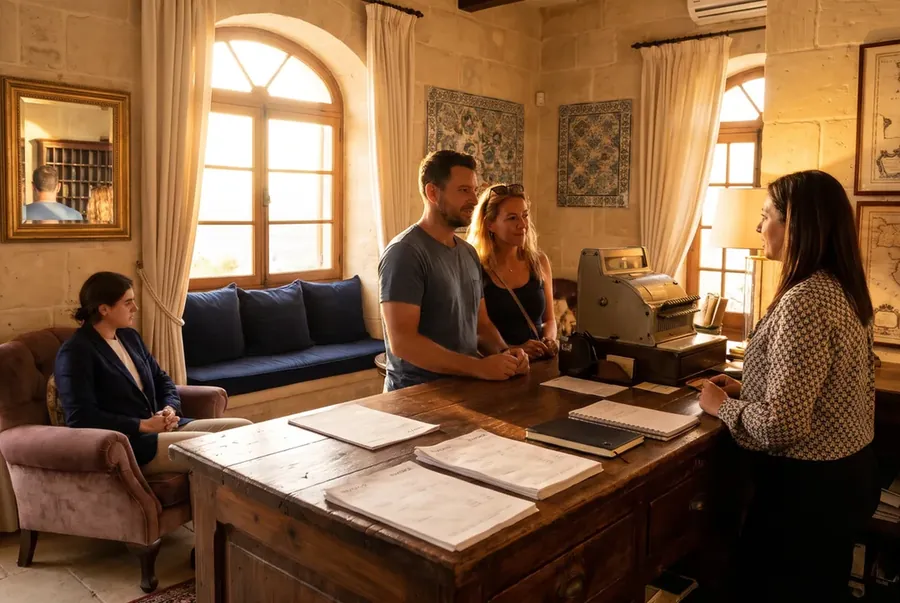
Malta’s eco-contribution is a mandatory nightly charge for guests, designed to support environmental initiatives and infrastructure. For hotel, guesthouse, and short-let managers, understanding how to apply, report, and account for this fee is essential to remain compliant with local regulations. Even small missteps can result in penalties or guest complaints, so it’s important to handle every detail carefully.
The Basics of Malta’s Eco-Contribution
The eco-contribution applies to all paid overnight stays in licensed accommodation, including hotels, guesthouses, boutique hotels, and self-catering apartments. The rate is set centrally and, as of July 2026, is €1.50 per night for each guest aged 18 and over, with a cap of €22.50 per guest per stay. The Malta Tourism Authority (MTA) is responsible for setting and updating these rules, as well as overseeing licensing and compliance. However, both the nightly rate and the cap may change, so it is important to check the official MTA website or consult your accountant for the most current requirements before each season.
- The fee is charged per person, per night, and only applies to guests aged 18 and above.
- The maximum charge per guest is capped per stay, regardless of the number of nights or the property type.
- The eco-contribution must be itemised as a separate line on all invoices and receipts, not included in the room rate or hidden in other charges.
- The charge is mandatory for all categories of licensed accommodation, including properties in Gozo and Comino, and applies equally to direct bookings and those from OTAs.
A common mistake is to assume the rules do not apply to short-term lets or to properties booked via international platforms. In fact, all licensed accommodation is included, and the property operator is responsible for compliance, regardless of the booking channel.
Who Collects and Reports the Fee
The responsibility for collecting the eco-contribution falls entirely on property operators. This includes hotels, guesthouses, B&Bs, and licensed short-let operators. The fee must be collected from guests at the time of stay—either at check-in or check-out—and accurately recorded. Operators then report the collected amounts through the government’s online portal, which is managed by the Office of the Commissioner for Revenue (CFR).
Reporting frequency and payment deadlines are determined by the CFR and may be monthly or quarterly, depending on your property’s category and volume. The deadlines can change, so it is important to check directly with the CFR or your accountant. Failure to report or remit the eco-contribution on time can result in fines or administrative penalties.
For example, if a guesthouse in Sliema hosts a couple (both over 18) for 10 nights, the total eco-contribution would be €30 (2 guests x 10 nights x €1.50), but the cap would limit the charge to €22.50 per guest, for a total of €45 for the stay. The operator must collect this amount, record it, and declare it in the next scheduled report.
Typical mistakes include forgetting to collect the fee for OTA guests (assuming the platform handles it), or failing to report the full amount if guests pay in cash. Always ensure you are collecting and reporting for every eligible guest, regardless of how the booking was made.
Recording and Invoicing the Eco-Contribution
Malta requires the eco-contribution to be itemised separately on all invoices and fiscal receipts. This is not only for transparency with guests, but also to ensure that auditors can clearly see the amounts collected and remitted. Fiscal receipts must be issued using an approved cash register or certified software that is compliant with Maltese fiscal regulations. While this feature is planned for Ospitessa, it is not available yet, so hoteliers should use their current approved solution for fiscal receipts.
- Always show the eco-contribution as a separate line on invoices and receipts, clearly labelled (e.g., “Eco-Contribution Tax”).
- Ensure your cash register or software is registered and compliant with CFR requirements. If unsure, ask your supplier or accountant to confirm compliance.
- Retain all records, including guest registration forms, invoices, and fiscal receipts, for the period specified by the MTA (usually several years). This is essential in case of an audit or inspection.
- Double-check that the cap is respected—do not charge more than the allowed maximum, even for long stays.
A frequent error is to include the eco-contribution in the room rate or to forget to itemise it, which can result in guest disputes or issues during audits. Another common issue is using outdated or uncertified invoicing software, which may not meet fiscal requirements.
Practical Steps for Compliance
To ensure you meet all obligations, follow these steps:
- Register your property with the MTA and ensure your licence is current and covers your accommodation type.
- Collect the eco-contribution from all eligible guests (aged 18+) at the appropriate time (usually check-in or check-out). If using an online check-in or self-service kiosk, make sure the system prompts for the correct amount.
- Use a compliant system to record the charge and issue fiscal receipts. If you are unsure whether your system is compliant, consult your accountant or the CFR.
- Report and remit the collected amounts through the government portal (managed by the CFR) by the deadline set for your property type and location. Deadlines may differ for properties in Gozo or for those with fewer units.
- Regularly check for updates to rates, caps, or reporting procedures—these can change from year to year, and the MTA will publish notices in advance.
The Ospitessa platform supports the calculation and reporting of the eco-contribution, ensuring the nightly rate and cap are applied automatically for each eligible guest according to the latest rules. However, you must still use your approved fiscal receipt system for issuing official receipts until Ospitessa’s fiscal module becomes available.
Common Mistakes to Avoid
Several pitfalls can lead to non-compliance, guest dissatisfaction, or even financial penalties:
- Forgetting to apply the cap per guest per stay, resulting in overcharging and potential guest disputes.
- Charging guests who are under 18, who are exempt from the eco-contribution.
- Failing to show the eco-contribution as a separate item on invoices or receipts, which can cause confusion or problems during audits.
- Missing reporting or payment deadlines, which may result in penalties from the CFR.
- Assuming that OTAs or booking platforms collect and remit the fee—this is almost never the case; the property operator is responsible.
- Not updating your systems or processes when the rate or cap changes. Always check for updates before each season.
If you are unsure about any aspect, consult your accountant or contact the MTA or CFR directly. Rules can vary or be updated, and properties in less common categories (such as hostels or long-term lets) should confirm their specific obligations with the authorities.
Example: Small Guesthouse in Gozo
A guesthouse in Victoria, Gozo, welcomes a group of three adults and one 16-year-old for a week in August. The eco-contribution is calculated only for the three adults, for a maximum of seven nights each. The total is 3 adults x 7 nights x €1.50 = €31.50, but since this does not exceed the cap per guest, the full amount is due. The guesthouse records the charge in their PMS, displays it as a separate line on the invoice and on the fiscal receipt, and submits the monthly report through the government portal before the deadline. The fiscal receipt is issued using their registered cash register, and all documentation is retained for future audits.
In practice, properties in Gozo sometimes forget to apply the cap, especially for guests staying longer than two weeks, or may accidentally charge minors. Double-checking guest ages and using a compliant PMS to calculate the correct amount can help avoid these mistakes.
Checklist for Hoteliers
- Register and maintain your MTA licence and ensure it covers your property type.
- Check the age of every guest at check-in or during online registration to determine eligibility.
- Apply the nightly rate and cap correctly for each guest, updating your process if the rate changes.
- Itemise the eco-contribution on all invoices and fiscal receipts, using compliant hardware or software.
- Report and pay the collected amounts to the CFR on time, using the official portal.
- Keep all records (invoices, receipts, guest lists) for the period required by the MTA, in case of audit.
- Stay informed of any regulatory changes by regularly checking MTA and CFR communications or consulting your accountant.
For a full overview of what Ospitessa covers in Malta, including eco-contribution management and integrations with payment solutions, see what Ospitessa covers in this country.
If you want to see how Ospitessa can automate eco-contribution handling and streamline your guest billing, book a demo and see it on your property.